Hi there, thanks for checking out my work! This research project is currently active, so not all of the information and artifacts are ready for viewing yet. In the mean time, please enjoy the work done so far, and be sure to check back soon for updates!
Overview
Face It Together is an addiction treatment center that offers loved ones of addicted people individualized coaching services. They wanted to explore how messaging strategies could attract more engagement. The focus for this project was exploratory research to uncover insights about the target audience’s attitudes and behaviors in order to drive user-centric changes to messaging efforts within website content.
Problem to Solve
Face It Together offers services to support loved ones going through another person’s addiction, but conversion rates were not as high as anticipated. The goal was to gain a better understanding of what strategies work well within the space and what types of messaging strategies could increase sign up rates.
How might researching the impact of website content improve engagement with Face It Together’s coaching services?
Target Audience
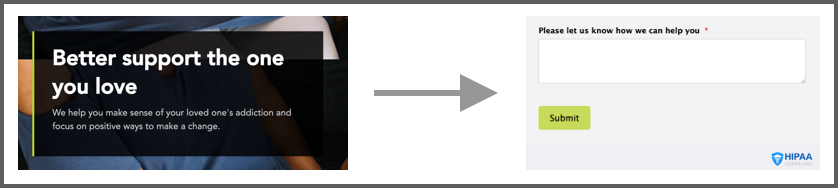
The target audience are loved ones (family and friends) of people struggling with addiction who may be seeking support services to help them navigate the situation and find solutions to dealing with the consequences of crisis.
Approach
Area of Focus
The focus for this project was discovery research to uncover insights about the target audience’s attitudes and behaviors in order to drive user-centric changes to messaging efforts.
Role, Scope & Constraints
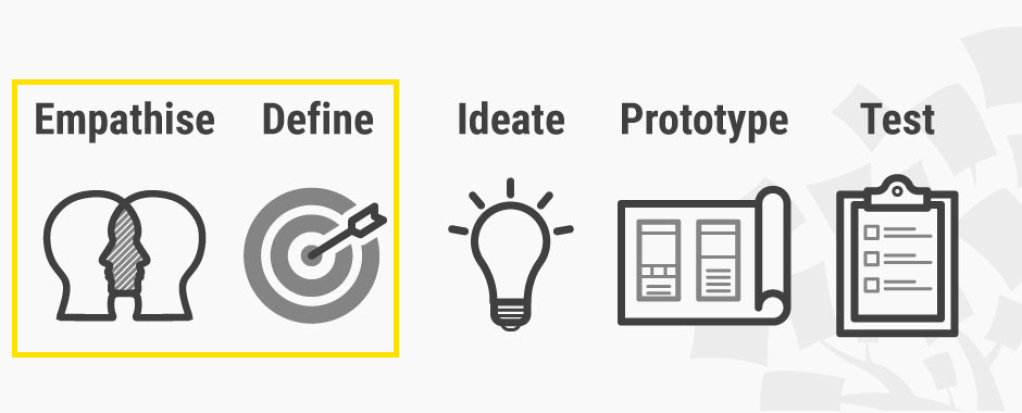
Planning and executing a variety of research methods was necessary to capture data that would illuminate ways to improve messaging and audience engagement. Methods were selected based on their appropriateness in answering research objectives, as well as being able to be performed by a solo researcher with a non-existent budget.
The unique skill within this project was in navigating the various layers of the problem space – addiction, family dynamics, decision making, motivation, brand messaging, health and wellness attitudes, etc. – in a way that could drive effective changes to the current message strategies being used by the organization to attract and retain clients for coaching services.
Process
Identifying Goals and Methods
Exploratory research would be crucial to gaining a broad understanding of how loved one’s of addicted persons currently behave within the recovery services domain. Specifically, how the audience relates and reacts to messages about available coaching services. After communicating with stakeholders about their intentions, some goals for the research emerged:
- Identify what approaches are working for similar organizations
- Understand the target audience’s attitudes and behaviors more in-depth
- Determine messaging styles, tones, and strategies that impact audience engagement
Planning the Research
Planning to implement a 3-prong research approach included creating a prospectus covering the objectives, methodologies, composition and timeline so stakeholders would know what to expect throughout the entire process. The following methods were selected to meet identified objectives:
Literature Review
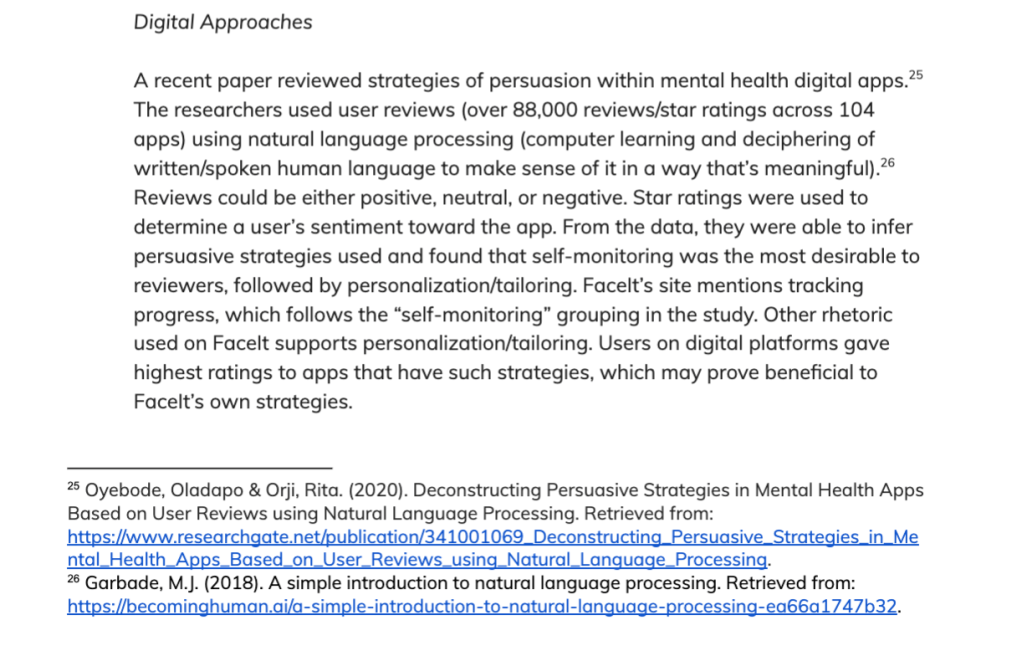
Allows us to see what is already known about human factors and industry practices.
Competitive Analysis
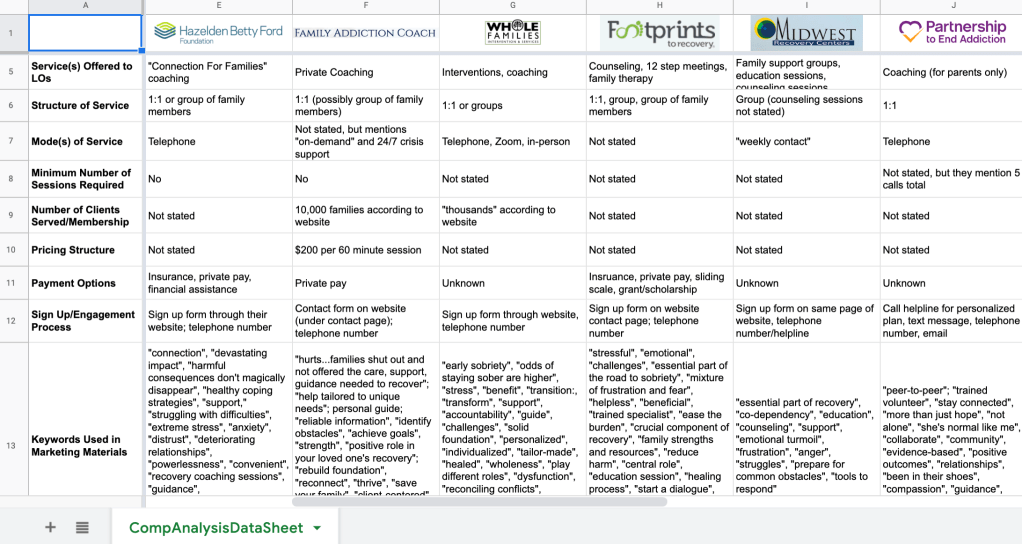
Raw data sheet of comparative organizations
Reveals what other organizations in the addiction recovery space do to attract and retain clientele.
Survey

Provides direct feedback to better understand feelings and reactions to support services and its messaging.
Conducting the Research
Research was conducted using guerrilla tactics to operate within the constraints of the project. A literature review, competitive analysis, and survey were selected to gain the most relevant information within the timeframe and abilities of a solo researcher operating remotely.
Literature Review
Systematic searches through Google Scholar, JSTOR, and Directory of Open Access Journals (DOAJ) to access scientific studies for consideration when making business decisions regarding messaging. The dimensions to the right were considered for inclusion:
- psychology (individual response, motivation, behavioral change)
- behavioral health practice (family dynamics, addiction)
- marketing (communication, messaging, branding, media relations)
- linguistics (language styles, phrasing, semantics, persuasion)
Check out the full literature review here!
Competitive Analysis
Several competitors were considered for analysis based on the type of service provided, the structure and mode of services, and the language used within online content. Analysis focused on understanding messaging competition and available consumer options when seeking support services.
Inclusion Parameters for Analysis
- Direct Competitor Criteria:
- Service is offered to loved one independently of the recovery of someone else
- Sessions are individual (1:1)
- An addiction recovery professional/organization administers the service
- Indirect Competitor Characteristics:
- Online forums not moderated by addiction recovery specialists
- Group or multi-party settings/services
- Free-of-charge services
Check out the full analysis data set here!
Survey
Data gathered from the previous research methods was used to guide survey creation. Three key considerations were designed into the survey to yield relevant results while tending to user experience during survey completion.

Only one screening criterion was presented: being the loved one of an addicted person. Broad screening was used to capture as many people as possible and generate different viewpoints.

To encourage all loved ones to provide feedback, screeners were minimal and skip logic was used to route participants to question sets based on if they had or had not sought professional services before.

Because of the deeply personal nature of the material and some of the qualitative questions within the survey, anonymity was assured to participants to encourage honest and open responses.
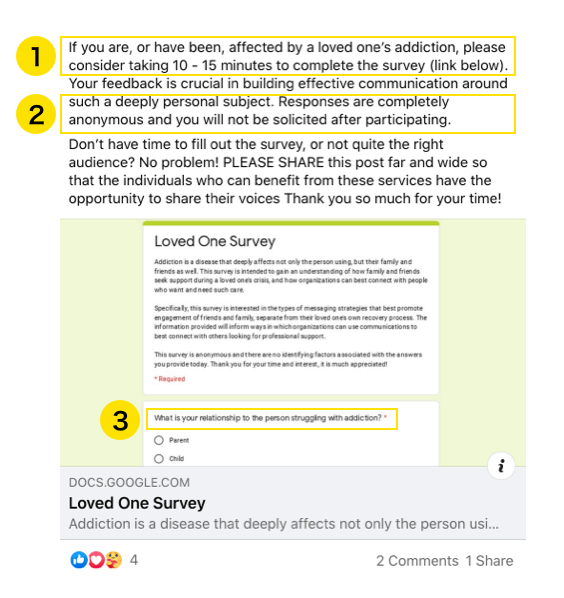
Convenience sampling was employed using social media channels. Encouraging sharing of the original post was another way to sample quickly, cheaply, and remotely.
1. Self-screener so people can knowingly opt in if they fit the target audience demographic.
2. Assurance of anonymity for transparency and trust building.
3. A “backup” screener built into the survey to ensure that responses were truly reflective of the target audience (I was able to exclude one response set thanks to this first question!).
Questions were designed to gather both quantitative data and qualitative insights for a wide view of the targeted population under study. Below are some of the pieces of information gathered through the survey.

- Relationship to addicted person
- How long the person has been dealing with the consequences of their person’s addiction
- Use of services in the past
- Preferences for modes of messaging
- Rating need for support
- Barriers to following through with service
- Keywords they are drawn to

- Positive impressions from marketing materials
- Negative impressions from marketing materials
- Most helpful/frustrating aspects of services
- What impressions does the term “coaching” have on individual
- What information is absolutely critical to signing up for services
- Additional insights missed by other survey questions
Analyzing the Research & Identifying Insights
While data analysis is still ongoing, early findings are promising in giving an initial direction for Face It Together to move in with their messaging intentions.
Literature Review Key Findings
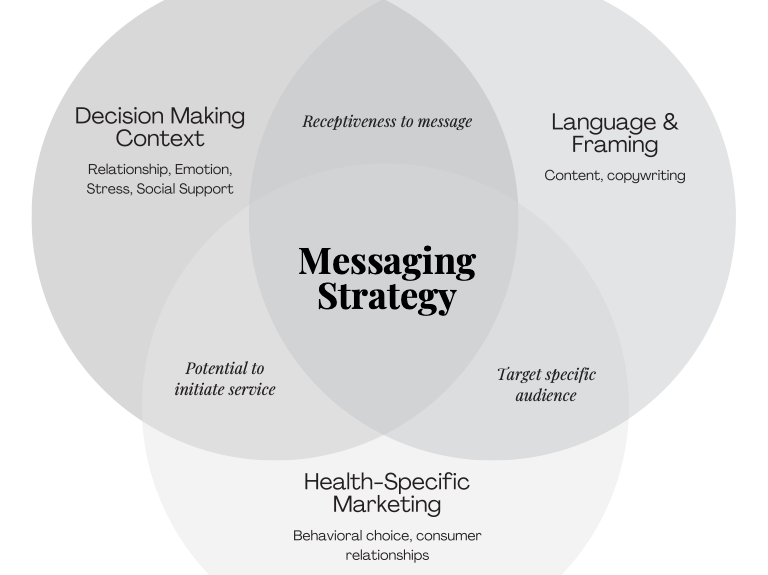
The literature review revealed that living next to addiction can alter communication behaviors. Further, chronic stress can affect decision-making processes. For messaging, framing can predict health behavior intentions, especially when messages convey care and personalization.
Competitive Analysis Key Findings

Using questions in language is a powerful way to engage users. It can help a reader feel connected to the source and build trust.

Organizational identity language (i.e., spirituality) can help persuade or dissuade engagement, depending on personal identity alignment.

Uniqueness of family dynamics and personalized, curated service planning was consistent across nearly all competitors.
A more detailed report of the key findings can be found here.
Survey Data Emerging Trends
Survey responses are still currently being collected, so data is preliminary. A quick glance of the data shows some emerging trends:

50% reported the most common barriers to services as price and time commitment.

Terms “confidential” and “evidence-based” builds the most trust (61%, 53% respectively).
Want more details? Check out the codebook!

70% reported personal recommendations would make them most willing to engage in services.

The term “coaching” was met with skepticism amongst roughly every 1 out of 3 of respondents .
Next Steps
The research is revealing the complexity of making decisions for oneself during a family crisis, and how language and framing of content can persuade or dissuade action. Even when done quickly and with limitations, audience feedback can illuminate ways to improve their experience.
Present Limitations
- Initiating the survey amidst the holidays, Covid, and other sociopolitical distractions means people are busy and cognitively tapped.
- Google Survey does not have the same “polish” as other platforms, perhaps creating questions of legitimacy, but was selected because of its consistent skip logic performance.
- Convenience sampling could affect population representativeness.
Future Recommendations
- After general feedback, implementing more nuanced methods of data collection:
- Intercept surveys embedded in Face It Together’s website to capture a more specific audience already in the mindset of seeking services.
- Contextual interviews to observe participant reactions to current website and messaging content.
Data collection is still ongoing, and the survey has been recirculated to boost response numbers. After the testing window closes, I will analyze and synthesize data into a final report for stakeholders, and provide recommendations based on the results. Stay tuned!
 SHANNON FINN